I want to take the start of a new year as an opportunity to reflect on what lies ahead in 2026 and beyond.
Each new year brings us closer to one of the most significant transitions the packaging industry has seen in decades. The Packaging and Packaging Waste Regulation (PPWR) is shaping the industry in fundamental ways. January 1, 2030, when all packaging placed on the EU market must be recyclable by design, is now just four years away. This regulation is a central force driving the paperisation of the packaging industry, with plastics solutions increasingly giving way to fibre-based packaging.
Our role is to help our customers not only comply with new requirements, but also use this inflection point to start viewing packaging as a strategic, value-enhancing asset. The right packaging that taps into consumers’ preferences for sustainable solutions and health and wellness trends plays a key role in elevating the overall brand experience.
Investing for the future
At Walki, we work towards all our solutions being recyclable, compostable, durable or made of renewable materials by 2030. This ambition permeates everything we do, starting with our R&D.
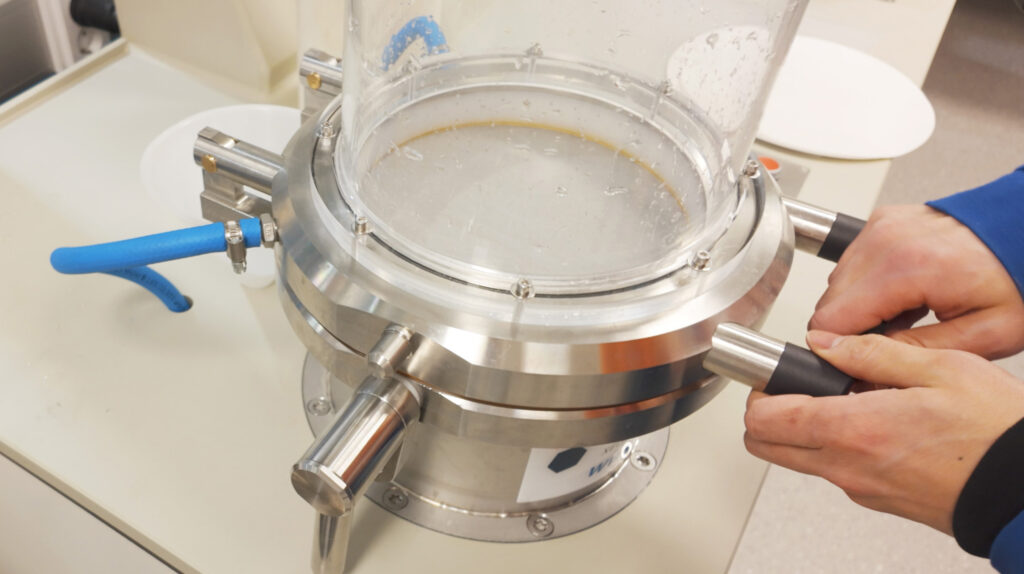
In 2025, we invested in our own Recyclability Lab at the Technical Competence Centre (TCC) in Pietarsaari, Finland. This in-house testing facility allows us to accelerate our innovation process and investigate the recyclability of different materials combination. Further, we have been able to substantially increase our R&D resources thanks to the strong support from our parent group, Oji Holdings. Maintaining R&D leadership is critical during periods of major transition, and together with OJI we are seeing strong synergy benefits materialise in our innovation teams.
Walki’s in-house laboratory assesses the recyclability of packaging to ensure proper collection, sorting and reuse.
In recent years, we have helped many of our customers replace polymer-based solutions with easily recyclable fibre-based packaging that provides the same functional properties but with lower EPR fees, less carbon emissions and a more sustainable raw material base. In 2025, our paper-based solutions grew by 27 % and overall portfolio recyclability in Consumer Packaging improved from 62% to 65%.
While the future for packaging is increasingly fibre-based, plastics still play a vital role in demanding high-barrier applications. In this sense we are material-agnostic: the most important function of food packaging is to keep the food safe and extend prolong shelf life, as food waste is a major contributor to greenhouse gas emissions.
The new Walki Plasbel extruders in Murcia for compostable materials and materials with a high recycled content.
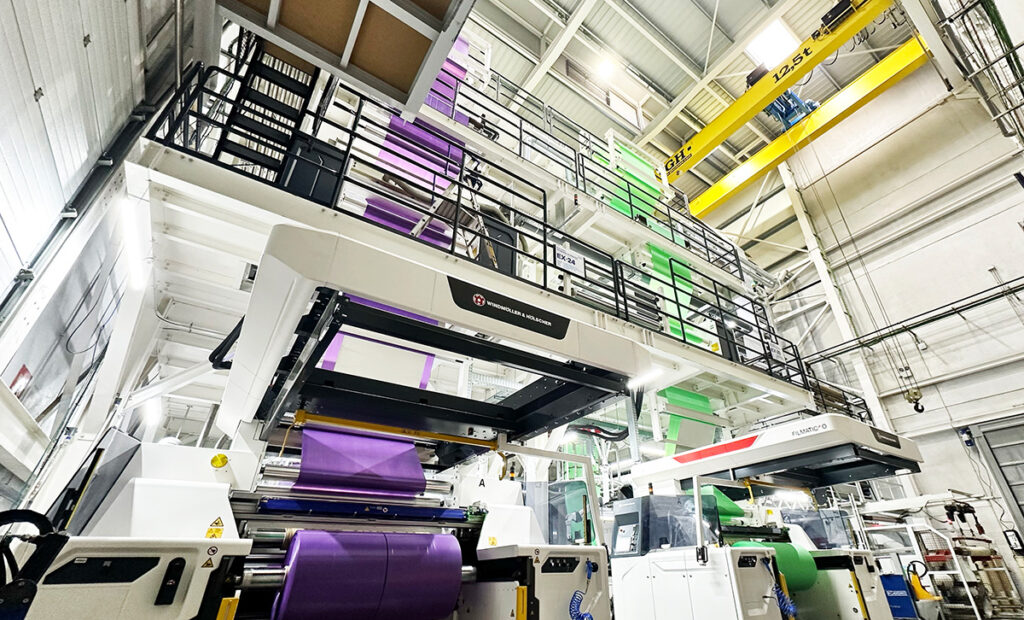
As we continue to invest in new production capacities across our network of plants, our guiding principle is to create value to our customers. We have invested in a state-of-the-art flexographic printing machine in Säkylä, Finland, enabling us to meet consumers brands’ high requirements for visually appealing food packaging. New biofilm extruders in Ylöjärvi, Finland and Murcia, Spain, support the growing need for compostable products. In addition, the investments in dispersion coating and glue lamination capabilities in Steinfurt, announced in 2024, are now in the ramp up phase.
We have also added a new production line in Duffel for construction facings and membranes, helping us meet the growing demand for recyclable and fire-retardant solutions in the construction industry. With the right materials, we can support our customers not only in regulatory compliance, but also in enhancing circularity and improving the energy efficiency of buildings.
Looking ahead towards a circular future
While sustainability commitments have been challenged in some parts of the public debate, for us at Walki they remain a core pillar of our strategy. Aiming for sustainability not only makes business sense: it is essential in a world facing climate change and biodiversity loss. We remain firmly committed to a circular future as the only viable path forward and continue to work consistently towards making it a reality.
In 2025, we achieved the EcoVadis Gold Medal for our sustainability performance and secured validation of our SBTi targets. Internally, we have strengthened engagement across the organisation through initiatives such as our Walki Environmental Day, celebrated on June 5, and the rollout of a mandatory sustainability e-learning course. In parallel, we ensure our own – and our customers’ – readiness for future regulatory requirements such as the PPWR and the Omnibus framework.
Our work starts with our employees, which is why we have added a fourth pilar to our sustainability agenda. Engaged people are essential for turning our three other pillars; circular future, low emissions and sustainable raw materials, into real solutions.
In 2026, we will continue to invest in our people, our capabilities, and our production plants to ensure that we can support our customers in meeting and shaping a circular future.
Looking forward to our journey together!
Leif Frilund